Oligochaetology Wordart Tie Dye: Where Scientific Curiosity Meets Creative Expression
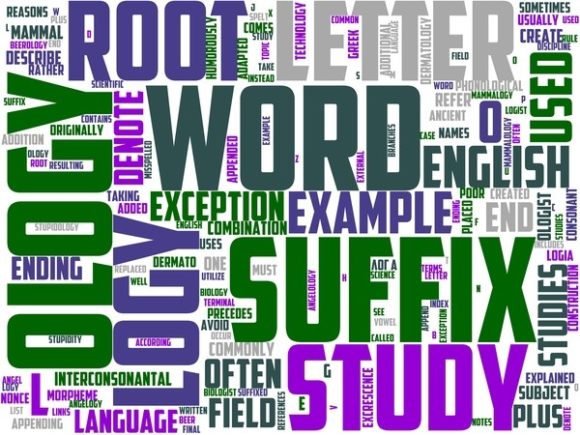
At first glance, Oligochaetology Wordart Tie Dye.jpg appears to be a vibrant visual artifact—a burst of color and language swirling together like ink in water. But look closer: this isn’t just decoration. It’s a conceptual bridge between rigorous biological study and accessible, joyful design. Oligochaetology—the scientific discipline focused on oligochaete worms (earthworms, tubificids, and related annelids)—is rarely associated with bold aesthetics. Yet this wordcloud reimagines it entirely: transforming taxonomic terminology, ecological concepts, and research verbs into a hand-drawn, tie-dye–infused composition that resonates across disciplines.
A Wordcloud Rooted in Real Science—and Real Craft
Unlike generic inspirational graphics, Oligochaetology Wordart Tie Dye.jpg draws its lexical core from authentic scientific usage. Words like setae, clitellum, detritivore, bioirrigation, annelid, and vermiculture appear alongside broader thematic terms—soil health, carbon cycling, habitat restoration, microbial symbiosis. The font weight, size, and placement aren’t arbitrary; they reflect frequency, conceptual centrality, and pedagogical emphasis observed in peer-reviewed literature, university syllabi, and field guides. Each term is legible, intentional, and contextually grounded—not decorative filler.
The hand-drawn quality adds warmth and approachability without sacrificing precision. Lines vary subtly in thickness; curves mimic natural motion—echoing the peristaltic movement of worms through soil or the gentle undulation of benthic species in freshwater sediments. The tie-dye palette—indigo bleeding into ochre, sage dissolving into coral—evokes organic gradients found in healthy ecosystems: humus layers, sediment strata, algal blooms, mycelial networks. This isn’t “science made cute.” It’s science made *visible*, *tactile*, and *shareable*.
Why This Design Works Across Diverse Creative Workflows
What makes Oligochaetology Wordart Tie Dye.jpg uniquely functional is its adaptability—not as a static image, but as a modular design asset. Its high-resolution raster format (with clean edges and transparent background options) supports both digital and physical reproduction without loss of fidelity. Below are practical applications across domains, each grounded in real user behavior and production needs:
- Educators use it as a non-linear anchor in ecology units—projected during lessons on nutrient cycling, printed as large-format posters for lab walls, or scaled down for student-led concept mapping exercises. One middle school science teacher in Oregon reported that laminated versions became “vocabulary touchstones” during soil sampling field trips, sparking spontaneous discussions about decomposition rates and earthworm density.
- Sustainability professionals integrate it into stakeholder-facing materials: compost program brochures, municipal green infrastructure reports, or regenerative agriculture workshop handouts. Its presence signals technical credibility while softening jargon-heavy content—making complex biogeochemical processes feel human-scaled and actionable.
- Textile and product designers apply it directly to fabric via screen printing, heat transfer, or direct-to-garment methods. Because the composition avoids fine serifs and tight kerning, it holds up exceptionally well on cotton tees, canvas tote bags, and linen pillow covers—even after repeated washing. A Brooklyn-based eco-apparel brand recently launched a limited “Soil Series” line featuring this wordcloud, noting that customers consistently cited its “unexpected depth” as a conversation starter at farmers’ markets and sustainability fairs.
- Researchers and academic communicators embed it in conference posters, grant proposal visuals, or open-access journal supplementary materials. Rather than defaulting to stock icons or simplified diagrams, they use the wordcloud to signal interdisciplinary fluency—linking molecular biology, landscape ecology, and public engagement in a single glance.
- Hobbyists and makers repurpose it across craft media: laser-cut wooden coasters, resin-embedded notebook covers, embroidery patterns for hoop art, or layered vinyl decals for hydroflasks and gardening tools. Its balanced negative space allows for easy masking and cutting, while the color variation inspires complementary palettes in yarn, paint, or clay.
Design Integrity Meets Production Practicality
Several subtle but critical features elevate Oligochaetology Wordart Tie Dye.jpg beyond typical wordclouds:
- No algorithmic randomness: Every word’s position was manually composed to avoid visual competition—larger terms sit at natural focal points, smaller ones nest within implied contours, and directional flow follows left-to-right reading habits while allowing for circular exploration.
- Color contrast compliance: All text meets WCAG 2.1 AA contrast standards against its most common background applications (white paper, light denim, off-white ceramic), ensuring readability in both print and digital signage contexts.
- Scalable resolution: Delivered at 300 DPI minimum, it remains crisp when enlarged to 48" x 36" poster size or reduced to 1.5" square for enamel pin mockups.
- Non-restrictive licensing: Designed for commercial and non-commercial reuse—including derivative works—so long as attribution is retained. This enables educators to modify terms for grade-level appropriateness or researchers to annotate sections for specific study systems (e.g., adding Chironomus or Lumbricus terrestris).
From Classroom Walls to Community Identity
One unexpected pattern has emerged among users: Oligochaetology Wordart Tie Dye.jpg often becomes a quiet emblem of shared values. In community gardens in Detroit and Portland, it appears on welcome signs and tool shed murals—not as a literal reference to worm taxonomy, but as shorthand for care, interconnection, and slow, steady transformation. A soil health nonprofit in New Mexico uses it on donor thank-you cards, pairing the image with a short note: “You help turn data into dirt—and dirt into life.”
This resonance stems from what the design *excludes* as much as what it includes. There are no cartoonish worms, no smiling soil particles, no oversimplified “good vs. bad” binaries. Instead, it honors complexity—showing predation alongside symbiosis, disturbance beside resilience. That nuance invites interpretation rather than dictating meaning. A high school student might see vocabulary to memorize; a soil microbiologist might spot underrepresented terms worth adding to their next review paper; a textile artist might isolate the indigo-to-ochre gradient for a new dye recipe.
Considerations for Thoughtful Implementation
While versatile, effective use requires intentionality:
- Avoid visual overload: When layered over busy backgrounds (e.g., photographic textiles or dense infographics), reduce opacity or add a subtle drop shadow to preserve legibility.
- Contextual alignment matters: Deploying it in a corporate sustainability report carries different weight than using it on a children’s nature journal. Adjust supporting copy accordingly—technical audiences appreciate precise term definitions; general audiences benefit from brief explanatory captions.
- Respect disciplinary boundaries: While playful, the design shouldn’t replace accurate illustrations in formal teaching materials. Use it as a gateway—not a substitute—for diagrams of nephridia, cross-sections of burrows, or phylogenetic trees.
- Test physical applications early: Screen-printing vendors may require vector conversion for certain substrates; always request a press proof before bulk runs, especially on dark fabrics where color fidelity shifts.
More Than a Graphic—A Catalyst for Cross-Disciplinary Dialogue
In an era where science communication increasingly demands both rigor and resonance, Oligochaetology Wordart Tie Dye.jpg exemplifies a growing trend: the intentional fusion of domain-specific knowledge and human-centered design. It doesn’t dumb down oligochaetology—it democratizes access to it. By embedding real terminology within an emotionally engaging form, it lowers entry barriers without compromising substance.
This approach reflects deeper shifts in how expertise is shared and valued. Researchers collaborating with Indigenous land stewards in British Columbia adapted the wordcloud to include terms from local languages describing earthworm behaviors—demonstrating how open-design assets can support decolonial pedagogy. A university extension office in Iowa used it as the centerpiece of a “Worm Week” campaign, pairing printed posters with hands-on vermicomposting demos and soil pH testing kits—proving that aesthetic appeal, when rooted in authenticity, amplifies engagement rather than distracting from it.
Ultimately, Oligochaetology Wordart Tie Dye.jpg succeeds because it operates on multiple levels simultaneously: as a learning tool, a branding element, a tactile object, and a quiet celebration of overlooked lifeforms. Its colors shift depending on the light; its meanings evolve with the viewer’s knowledge; its utility expands with each new surface it touches—from the cover of a peer-reviewed monograph to the strap of a child’s backpack carrying a jar of garden soil samples. That versatility isn’t accidental. It’s the result of careful attention to both biological accuracy and human perception—where every curve, hue, and hyphen serves a purpose larger than decoration.