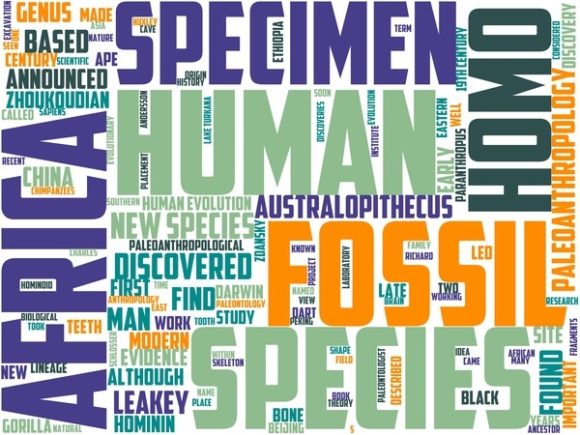
Paleoanthropology Wordart Print: Where Science Meets Creative Expression
At first glance, a Paleoanthropology Wordart Print might seem like just another decorative design—but it’s much more than that. This hand-drawn, colorful wordcloud blends rigorous scientific vocabulary with artistic intention, transforming terms like Homo erectus, Oldowan tools, bipedalism, fossil record, and mitochondrial DNA into an engaging visual experience. Far from a superficial aesthetic, it serves as both an educational anchor and a versatile creative tool—ideal for educators, designers, science communicators, crafters, and lifelong learners alike.
What Is Paleoanthropology—and Why Does It Matter?
Paleoanthropology is the interdisciplinary science that studies human evolution through fossils, archaeology, genetics, and comparative anatomy. It asks foundational questions: Where did we come from? How did our ancestors walk, think, eat, and adapt? When—and why—did key traits like large brains, complex language, or symbolic behavior emerge?
Unlike disciplines focused solely on modern humans, paleoanthropology reaches deep into time—spanning over 6 million years—from early hominins like Sahelanthropus tchadensis to anatomically modern Homo sapiens. Its findings reshape how we understand identity, diversity, resilience, and even climate adaptation—not just in prehistory, but in today’s world.
From Lab Notes to Living Design: The Power of Visual Vocabulary
A Paleoanthropology Wordart Print does something unique: it makes specialized terminology accessible and emotionally resonant. Each word in the cloud—whether Lucy, Neanderthal, stratigraphy, or encephalization—carries layers of meaning, discovery, and debate. Arranged thoughtfully (not randomly), the design invites curiosity rather than intimidation.
This isn’t “dumbing down” science—it’s opening doors. A student seeing “Ardipithecus ramidus” nestled beside “tool use” and “East African Rift” may pause, google, and begin connecting geography, anatomy, and behavior. A teacher can project the print during a lesson on hominin migration. A museum gift shop can feature it on tote bags—sparking conversations at the checkout line.
Why Hand-Drawn & Colorful? The Human Touch Behind the Data
The hand-drawn quality matters. In an age of AI-generated graphics and sterile infographics, organic linework and intentional color palettes signal care, authenticity, and humanity—values deeply aligned with paleoanthropology itself. Warm ochres echo ancient sediments; cool blues suggest genetic continuity; earthy greens reflect ecological context.
Color also supports memory and cognition. Research in educational psychology shows that color-coded semantic grouping improves recall—especially for abstract or technical terms. So when “bipedal locomotion” appears in burnt sienna and “symbolic behavior” in indigo, the brain begins building associative pathways long before formal study begins.
Practical Uses: More Than Just Pretty Prints
This wordcloud isn’t confined to framing. Its adaptability is one of its greatest strengths—designed for real-world application across industries and everyday life:
- Educational Settings: Printed as classroom posters, interactive flashcards, or lab wall decor—supporting NGSS-aligned units on evolution, anthropology, or Earth science.
- Creative Entrepreneurship: Applied to fabric for aprons, scarves, or tote bags sold at science festivals, university bookstores, or Etsy shops targeting curious adults.
- Science Communication: Embedded in digital newsletters, conference banners, or podcast show notes to reinforce thematic consistency and brand identity.
- DIY & Maker Culture: Used in scrapbooking layouts documenting fieldwork journals, embroidered onto denim jackets, or heat-transferred onto ceramic mugs for geology club meetups.
- Therapeutic & Reflective Practice: Featured in mindfulness journals or wellness spaces—reminding us that human resilience, adaptability, and community are ancient, embodied legacies.
Dispelling Common Misconceptions
Many assume paleoanthropology is only about “old bones”—or worse, outdated racial typologies. Neither is true. Modern paleoanthropology actively rejects scientific racism, emphasizing instead population-level variation, gene flow between groups (like Neanderthal-Denisovan-Homo sapiens interbreeding), and the cultural construction of “human.”
Likewise, the wordcloud doesn’t imply that evolution is linear or hierarchical (“from ape to human”). Instead, its circular, overlapping layout subtly reinforces branching phylogeny—no single word dominates; all coexist in relational context. Terms like “mosaic evolution” and “adaptive radiation” appear not as footnotes, but as central visual elements.
How It Fits Into Today’s World
In an era marked by rapid technological change and global uncertainty, understanding deep human history offers grounding. Climate shifts drove hominin dispersal. Social cooperation enabled survival in harsh environments. Innovation emerged not in isolation—but through shared learning across generations.
A Paleoanthropology Wordart Print becomes a quiet manifesto: We are shaped by time, environment, relationship, and change—and always have been. That perspective informs everything from sustainable design thinking to inclusive leadership models to trauma-informed education.
Getting Crafty—Without Compromising Integrity
“Get crafty with this beautiful wordcloud” isn’t just marketing speak—it’s an invitation to participate in knowledge-making. When you print it on a notebook, you’re choosing to document ideas alongside evolutionary milestones. When you embroider it on a pillow, you’re inviting rest *and* reflection. When you use it in a business card for a human-centered design studio, you’re signaling values rooted in empathy, adaptation, and evidence.
And because it’s designed for versatility—scalable vector format, high-resolution PNG, CMYK-ready for print—the same artwork works equally well on a tiny enamel pin (“Homo floresiensis” in miniature) or a 48" trade show banner (“Out of Africa, Into Imagination”).
Final Thought: A Bridge Between Disciplines
Science and art are often siloed—but they’ve never been truly separate. Early cave paintings at Chauvet or Lascaux were paleoanthropological documents long before the discipline existed. Indigenous oral histories encode ecological knowledge spanning millennia. Even CRISPR gene editing draws inspiration from ancient bacterial immune systems.
The Paleoanthropology Wordart Print honors that continuum. It doesn’t reduce science to decoration, nor does it oversimplify complexity. Instead, it offers a meeting point—where curiosity meets craft, where data meets design, and where anyone, regardless of background, can see themselves within the epic, ongoing story of being human.
So whether you're planning a STEM outreach event, launching a science-themed apparel line, designing a university syllabus, or simply seeking a meaningful way to celebrate your love of discovery—this wordcloud isn’t just something to hang on a wall. It’s a conversation starter. A teaching tool. A reminder that wonder, rigor, and beauty belong together.