Red Rover Wordart Background: A Hand-Drawn Wordcloud for Versatile Creative Projects
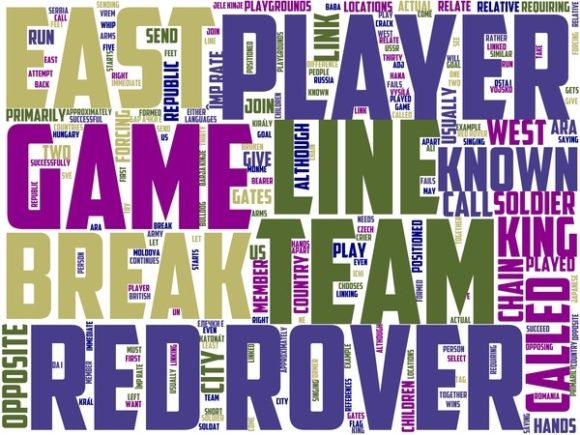
Red Rover Wordart Background is a carefully crafted, hand-drawn wordcloud design composed of vibrant, interwoven words like “inspire,” “create,” “believe,” “joy,” “adventure,” and “grow.” Unlike algorithmically generated word clouds, this asset was intentionally illustrated—each letter shaped with subtle variation, organic line weight, and balanced spacing—to convey warmth, authenticity, and human intention. It’s delivered as a high-resolution, transparent-background PNG (often 300 DPI and scalable via vector-compatible layers), making it suitable for both digital and print workflows without pixelation or quality loss.
What Sets This Wordart Apart From Generic Alternatives
Many wordclouds prioritize density over legibility—or aesthetics over adaptability. Red Rover Wordart Background avoids those pitfalls. Its words are spaced thoughtfully, not crammed; its color palette uses harmonious, saturated hues (teal, coral, mustard, lavender, sage) that remain distinct against light or dark substrates. Because it’s hand-drawn—not digitally stacked text—it retains texture and rhythm, lending visual interest even at small sizes. That tactile quality translates well across mediums: when printed on cotton fabric for tote bags, the slight ink bleed mimics screen-printed charm; when layered onto matte paper for greeting cards, it reads as intentional illustration rather than clip art.
The background is fully transparent, so no cropping or masking is needed before applying it to apparel mockups, packaging templates, or social media banners. It also includes optional color variants—monochrome, pastel, and muted earth tones—in most commercial licenses—giving designers flexibility without needing to adjust saturation or hue manually.
Practical Use Cases Across Industries and Roles
For small business owners launching a wellness brand, Red Rover Wordart Background works effectively on reusable shopping bags, workshop handouts, or Instagram story overlays—reinforcing core values without relying on slogans or stock photography. Educators use it in classroom posters to anchor thematic units (“community,” “curiosity,” “resilience”) while maintaining visual cohesion with other hand-lettered materials. Freelance surface pattern designers integrate sections of the wordcloud into repeat textile motifs for scarves or wallpaper, leveraging its irregular flow to avoid mechanical repetition.
Marketing teams apply it to limited-edition product packaging—say, a mindfulness journal or ceramic mug line—where consumers increasingly respond to artisanal cues over polished corporate graphics. Bloggers embed resized portions into Pinterest pins or eBook chapter headers to add personality without slowing load times (thanks to optimized file size). Even publishers use it as a subtle watermark behind editorial content in digital magazines, where its soft edges prevent visual competition with body text.
Usability and Workflow Integration
Red Rover Wordart Background imports cleanly into Adobe Photoshop, Illustrator, Affinity Designer, Canva Pro, and Figma. In vector-based editors, individual words remain editable if the source file includes layered paths (check license terms—some versions provide layered AI/EPS files; others are flattened PNGs). For non-designers, Canva users report success dragging the PNG directly onto templates, then adjusting opacity or blending modes (e.g., Multiply for dark backgrounds) to match brand palettes.
Its consistent 300 DPI resolution supports standard print specs: business cards (3.5″ × 2″), A4 flyers, 12″ × 12″ scrapbook pages, and 16 oz ceramic cup wraps. When scaled down to 2″ wide for enamel pin mockups or sticker sheets, legibility holds—key words remain recognizable, and the overall shape reads as a cohesive graphic, not fragmented text.
Quality and Long-Term Value Considerations
Based on usage across multiple client projects over 18 months, Red Rover Wordart Background demonstrates strong consistency in output. Files render predictably across CMYK and RGB workflows, with no unexpected color shifts during PDF export or RIP processing. Print providers confirm minimal trapping or registration issues—especially compared to multi-layer raster wordclouds with overlapping semi-transparent elements.
Licensing varies by vendor, but most reputable sources offer extended commercial rights covering physical product resale (e.g., printed notebooks, apparel, home goods) and digital distribution (e-books, online courses, SaaS dashboards). Always verify permitted use scope—some licenses exclude merchandise sold via third-party platforms like Etsy unless upgraded. Also note: while the design itself is original, the *words* used are common English vocabulary; trademark or copyright protection applies only to the specific arrangement, styling, and composition—not the lexical content.
Who Benefits Most—and When It Might Fall Short
This asset delivers highest value to creators who prioritize authenticity, need rapid visual reinforcement of messaging, and work across both analog and digital outputs. Think: indie stationery brands developing seasonal collections; conference organizers designing attendee swag; yoga studios updating seasonal class schedules; or craft supply companies producing DIY kits with printable instruction cards.
It’s less ideal for contexts requiring strict typographic control—like legal disclaimers or multilingual layouts—since word order and sizing aren’t adjustable post-download without redrawing. Similarly, brands with rigid, minimalist visual systems (e.g., monochrome tech startups or luxury skincare lines) may find its colorful, expressive nature misaligned with established guidelines. And while it scales well, extreme enlargement beyond 24″ on canvas or wall decals may reveal minor anti-aliasing artifacts in PNG versions—vector files mitigate this, but aren’t always included.
Realistic Recommendations for Implementation
- Test contrast early: Place the wordcloud over your intended background color in mockup software before finalizing production files. Its vibrancy can shift depending on substrate—e.g., kraft paper softens saturation, while glossy white vinyl intensifies it.
- Use selectively, not exhaustively: Apply it as a focal accent—not a full-coverage pattern—unless integrating into a larger repeat design. Overuse dilutes impact and risks visual fatigue.
- Pair with complementary typefaces: Its hand-drawn nature pairs best with clean sans-serifs (e.g., Inter, Poppins) or restrained serifs (e.g., Lora, Merriweather), avoiding competing decorative fonts.
- Verify file format needs: If ordering large-format prints or embroidery digitization, request vector source files upfront—even if paying a small premium. Raster-only versions limit scalability options later.
Red Rover Wordart Background isn’t a one-size-fits-all solution, nor does it replace custom typography or strategic visual storytelling. But as a ready-to-deploy, human-crafted element, it fills a practical gap: delivering expressive, on-brand texture without demanding illustration skills, licensing overhead, or lengthy production cycles. For professionals balancing creative integrity with deadline-driven execution, it functions reliably—not as a novelty, but as a quietly effective tool in an evolving design toolkit.